A beautiful patio can quickly become uncomfortable when strong gusts blow napkins away, knock over lightweight chairs, or make outdoor meals difficult. Even a small seating area can feel exposed when wind moves freely through the yard.
Good outdoor wind protection helps make your patio more comfortable without sacrificing its open-air feel. From movable screens to smarter furniture placement, a few practical adjustments can reduce wind exposure and make your outdoor space easier to enjoy.
Common Wind Problems in Outdoor Spaces
Wind affects more than comfort. It can move furniture, damage decorations, scatter leaves, and make outdoor gatherings stressful. Patios with few surrounding walls or plants are often more exposed to changing wind conditions.
Understanding how wind enters your outdoor area helps you choose solutions that fit your space. Before adding barriers, observe the usual wind direction and identify the spots where gusts cause the most trouble.
How Strong Winds Affect Patio Furniture
Lightweight chairs, folding tables, umbrellas, and cushions can shift or blow away during strong gusts. Flying accessories may damage nearby windows, scratch surfaces, or injure someone sitting close by.
Choose sturdy outdoor furniture and store loose items when windy weather is expected. Close patio umbrellas when not in use, and secure them according to the manufacturer’s instructions.
Why Open Patios Need Better Wind Protection
Patios without walls, fences, or dense planting have fewer obstacles to slow moving air. Wind can pass directly through the seating area, making it harder to relax, eat, or enjoy a conversation.
Adding a screen, planter barrier, or suitable outdoor divider can help reduce direct exposure. The right option depends on the patio’s size, prevailing wind direction, and how much openness you want to preserve.
Wind Risks Around Outdoor Seating Areas
Strong gusts can scatter tableware, blow dust into food, and make outdoor dining uncomfortable. They can also move unsecured heaters or topple poorly positioned decorations.
Keep walkways clear and avoid placing fragile objects near exposed edges. During severe weather, bring loose items indoors and stop using outdoor equipment that could become unstable.
Choosing Wind Protection for Exposed Patios
The best wind barrier should suit your patio’s layout rather than block every breeze. Screens, partial walls, and carefully placed plants can reduce direct wind while maintaining natural light and visibility.
David H. Trinklein, a horticulture specialist at the University of Missouri Extension, explains that “Windbreaks reduce air movement around the home.” This principle can also guide patio planning, the goal is to redirect or soften wind, not necessarily create a completely enclosed space.
Selecting Screens to Block Patio Winds
Outdoor screens made from suitable weather-resistant materials can shield seating areas from direct gusts. Options include framed panels, outdoor fabric screens, and transparent barriers that preserve views.
Check how each product is designed to handle wind before buying it. Screens need secure mounting, and portable models should be moved or stored when conditions exceed their rated limits.
Positioning Barriers to Reduce Wind Exposure
Start by identifying the direction wind usually comes from. Place the barrier between that direction and the seating area, ensuring it does not obstruct doors, paths, or emergency exits.
The University of Florida Extension publication by Bijay Tamang, Michael G. Andreu, Melissa H. Friedman, and Donald L. Rockwood notes that “Windbreaks are most effective when oriented perpendicular to the prevailing wind.” For a patio, this offers a useful starting point when deciding where a screen or planted barrier may work best.
Balancing Wind Protection With Outdoor Views
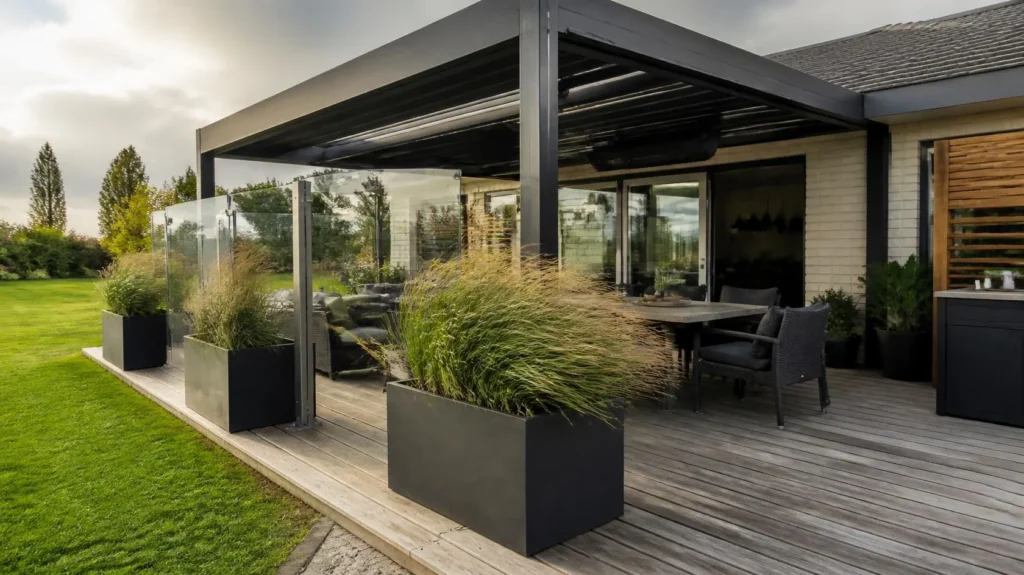
A solid wall may provide privacy, but it can also make a small patio feel closed in. Transparent panels, slatted screens, and carefully arranged plants can offer a more open appearance while reducing direct exposure.
Consider sunlight, privacy, maintenance, and local weather before choosing a design. Make sure any permanent barrier is suitable for the expected wind loads and installed securely.
Improving Patio Wind Protection Without Renovations
You do not always need major construction to make an outdoor space more comfortable. Freestanding screens, movable planters, and better furniture placement can provide practical improvements without changing the structure of your home.
Simple patio wind protection works best when several small changes support one another. Focus on the areas where people sit, dine, and relax, and choose solutions that can be adjusted when the weather changes.
Adding Freestanding Windbreaks Around Seating
Freestanding screens and large planters can create a sheltered corner around outdoor chairs or a dining table. Position them to reduce direct gusts without narrowing walking routes or blocking access to the house.
Choose stable products intended for outdoor use. A lightweight screen can become a hazard in strong winds, so follow its anchoring instructions and bring portable barriers inside when necessary.
Securing Lightweight Furniture and Accessories
Use suitable outdoor furniture weights, approved anchors, or secure storage to keep lightweight items from moving. Store cushions, tablecloths, and small decorations when strong winds are forecast.
Avoid relying on improvised weights that may damage furniture or create tripping hazards. Check umbrellas, awnings, and other wind-sensitive equipment regularly for loose fittings or signs of wear.
Arranging Patio Furniture for Wind Resistance
Place heavier furniture in sheltered areas and keep lightweight pieces away from exposed edges. Group chairs and tables in a practical layout that allows people to move safely without creating narrow gaps.
Keep furniture away from unstable screens, open flames, and areas where objects may fall. Reassess the arrangement after seasonal changes or whenever the usual wind direction shifts.

Create a More Comfortable Patio Today
A more enjoyable patio starts with understanding where wind enters and which areas need extra protection. Screens, stable furniture, secure accessories, and thoughtful placement can help create a space that feels comfortable without losing its outdoor charm.
Start with one exposed seating area and make a few manageable changes. Check weather conditions, secure movable items, and choose barriers suited to your home’s environment.