A home should be a place where children can explore, play, and grow without unnecessary risks. However, sharp tools, slippery floors, and unsecured furniture can quickly become safety hazards. A few practical changes can help prevent accidents and give parents greater peace of mind.
Creating home safety for families starts with understanding how children interact with their surroundings. As children become more curious and active, their safety needs change, too. Identifying potential dangers, making simple adjustments, and building good habits can create a safer environment for everyone.
Making Every Room Safer for Children
Every room has different risks, so childproofing should go beyond the nursery or playroom. Kitchens contain sharp tools, bathrooms have slippery surfaces, and living rooms may include unstable furniture or small objects that children could swallow.
Walk through your home at your child’s eye level and look for reachable objects, exposed cords, sharp corners, and unsecured items. Addressing these hazards early helps you prioritize the most important safety improvements.
Spotting Common Hazards in Each Room
Check the kitchen for hot surfaces, sharp utensils, and cleaning products. In bathrooms, secure medicines and toiletries while keeping an eye on wet floors. Bedrooms need attention to furniture stability, window access, and small objects that could cause choking. Regular inspections help you discover risks before an accident occurs.
Keeping Dangerous Items Out of Reach
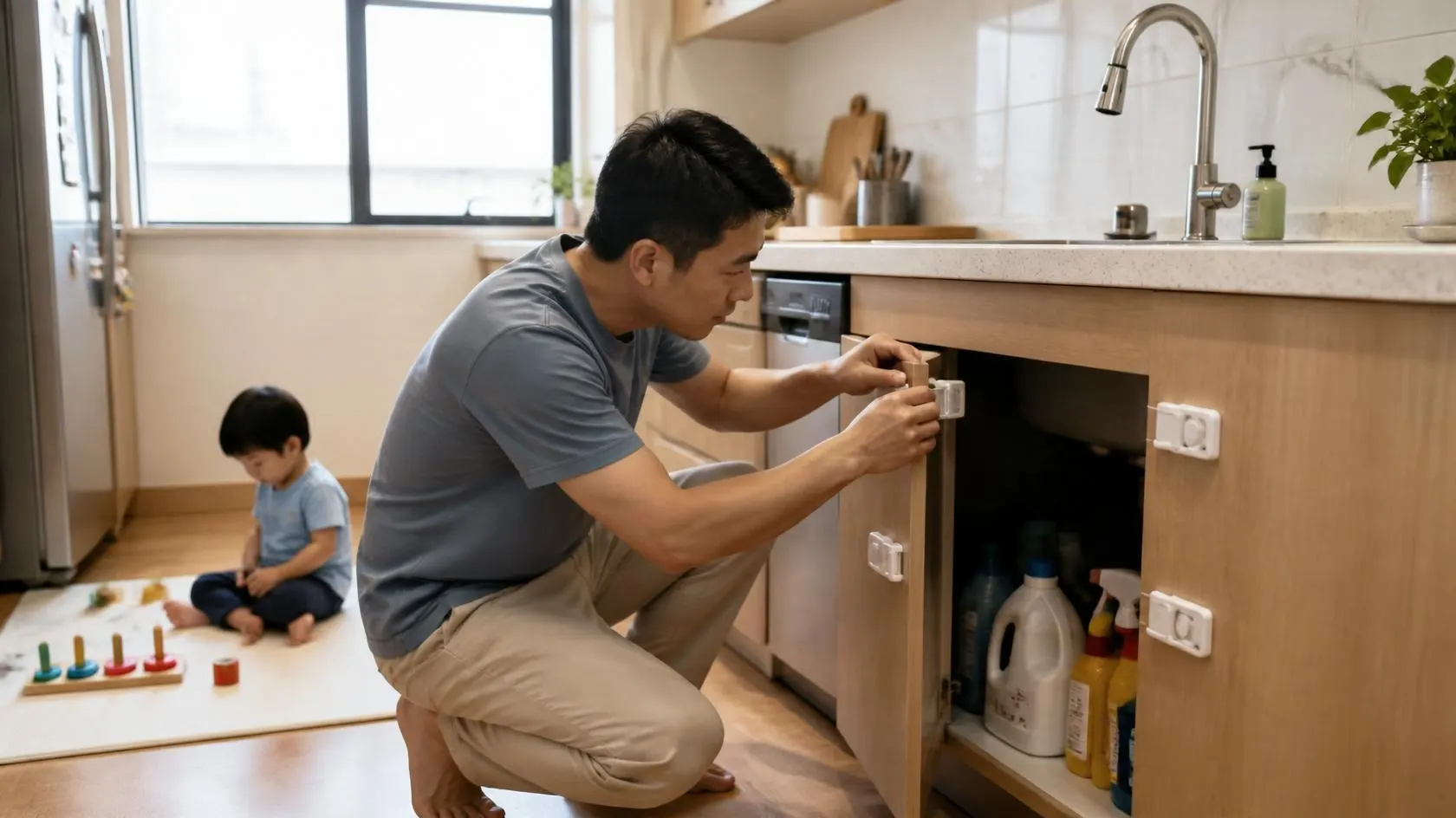
Store medicines, cleaning chemicals, batteries, matches, and sharp tools in securely locked cabinets. Keep hazardous products in their original containers and return them to storage after use. Remember that children can climb, so high shelves alone may not provide enough protection.
Creating Safe Spaces for Everyday Play
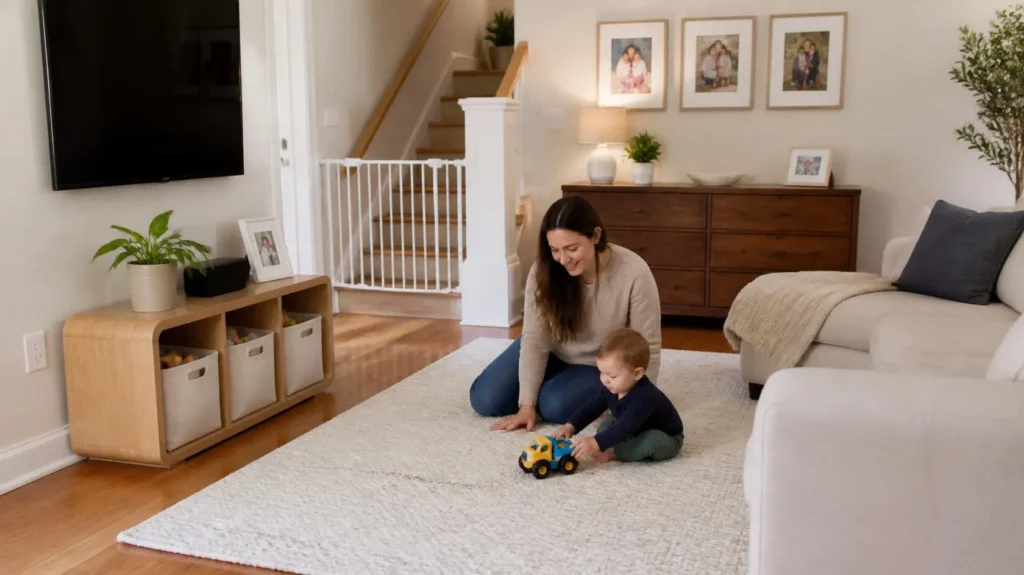
Give children a designated play area with age-appropriate toys and enough room to move around. Remove broken toys, loose cords, and small objects that younger children might swallow. Keep floors clear and choose furniture with rounded edges when possible. A well-organized play space makes supervision easier.
Simple Changes to Improve Child Home Safety
You do not need to renovate your entire house to improve child safety. Simple additions, regular maintenance, and thoughtful furniture placement can reduce common household risks. Focus first on hazards around stairs, windows, and heavy furniture.
Dr. Gary Smith, MD, DrPH, director of the Center for Injury Research and Policy at Nationwide Children’s Hospital, explained the seriousness of furniture accidents, noting that “The most devastating injuries that we see resulting from furniture tipping on children are injuries to the brain.” This highlights why securing heavy furniture should be a priority for parents.
Securing Furniture to Prevent Accidents
Anchor bookcases, dressers, and television stands securely to the wall using appropriate anti-tip devices. Keep heavy objects on lower shelves and avoid placing tempting toys on tall furniture. Check that furniture remains stable as children learn to stand, pull themselves up, and climb.
Adding Safety Gates and Window Locks
Install suitable safety gates near stairways and restricted areas. Use window guards or locks designed to prevent accidental falls, and move climbable furniture away from windows. Never rely on window screens to support a child’s weight. Robert Adler, former acting chairman of the U.S. Consumer Product Safety Commission, warned, “Even when adults are in the same room with children, dangerous tip-overs can occur.” This is why physical safety measures are important even when parents are nearby.
Preventing Slips, Trips, and Falls
Keep walkways clear of toys, bags, and loose cables. Secure rugs with nonslip backing, clean spills promptly, and ensure stairways have adequate lighting. Use sturdy handrails and repair damaged flooring when necessary. Encourage children to walk carefully, especially near bathrooms and stairs.
Building Safer Habits for the Whole Family
A safer home depends on both physical protection and everyday behavior. Parents and caregivers should regularly review household risks, demonstrate safe choices, and adjust rules as children grow. Consistency helps children understand that safety is part of daily life.
Make safety checks a shared family routine. Following home safety tips for children, such as storing dangerous items securely, checking smoke alarms, protecting windows, and supervising children around water, can help reduce everyday risks. Review your home regularly because new toys, furniture, and changing abilities can introduce different hazards.
Teaching Children Simple Safety Rules
Teach children not to touch hot appliances, play with electrical outlets, or approach unfamiliar people without permission. Explain rules in age-appropriate language and demonstrate what to do instead. Practice emergency procedures calmly, including how to call for help when necessary.
Checking Electrical Outlets and Appliances
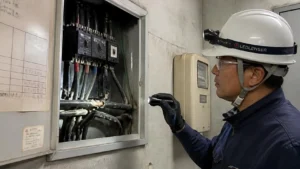
Inspect electrical cords for damage, keep appliances away from water, and avoid overloading power outlets. Use tamper-resistant receptacles or suitable outlet protection to reduce electrical risks. Keep cords out of children’s reach and replace damaged equipment instead of continuing to use it.
Following Home Safety Tips for Children
Make safety part of your family’s daily routine. Encourage children to put toys away, keep doors to restricted areas closed, and tell an adult when they notice something dangerous. Parents should continue supervising children and checking safety equipment because no single precaution can prevent every accident.
Make Your Family Home Safer Starting Today
Creating a safer home does not have to feel overwhelming. Start with one room, identify its biggest hazards, and make a few practical improvements before moving to the next area. Regular checks and consistent family habits can help reduce risks as your children grow.
Take the first step today, secure unstable furniture, store dangerous items safely, and clear walkways. Small actions can make your home a more comfortable and secure place for your children to learn, play, and thrive.