Stairs are part of everyday life, but a loose step, slippery surface, or poorly lit landing can turn a routine trip into a serious accident. Keeping stairs in good condition helps everyone move around the home with greater confidence.
Home Stair Safety starts with identifying hazards, improving the staircase, and checking for damage before small issues become bigger problems. A few practical changes can make daily stair use safer for children, adults, and older family members.
Finding Common Stair Hazards at Home
Before making improvements, inspect your staircase from top to bottom. Look for visible damage, unstable surfaces, and anything that could cause someone to trip or lose balance.
Pay particular attention to areas used frequently, including the first and last steps. The National Institute on Aging recommends securing handrails, improving stairway lighting, and keeping walking areas clear to help reduce fall risks.
Spotting Loose Steps and Worn Edges
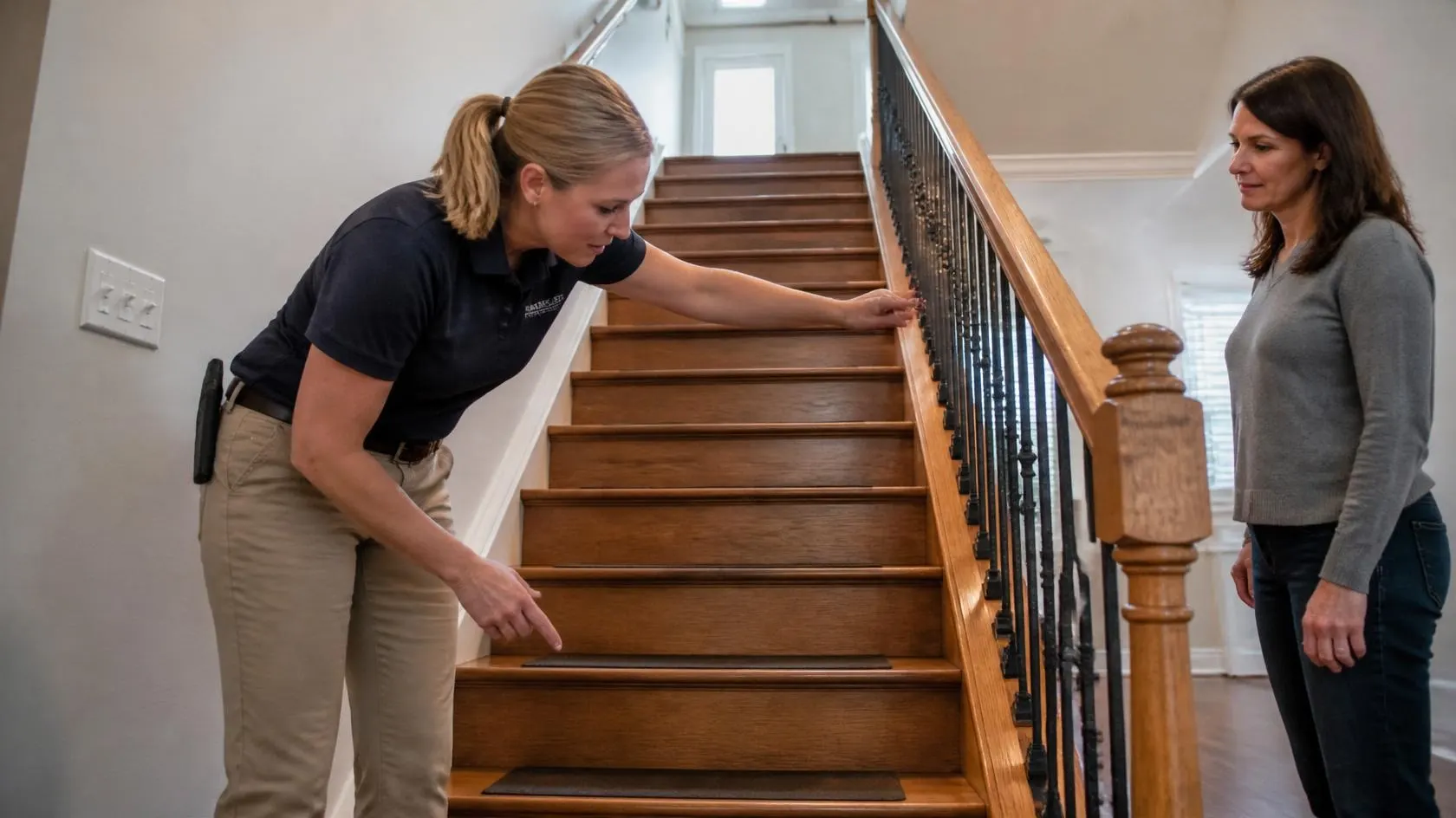
Check each step for cracks, loose boards, uneven surfaces, and worn edges. Damaged stair coverings can also create tripping hazards. If a step moves underfoot or shows significant structural damage, restrict access when possible and arrange a proper repair before using it again.
Checking Handrails Before Using the Stairs
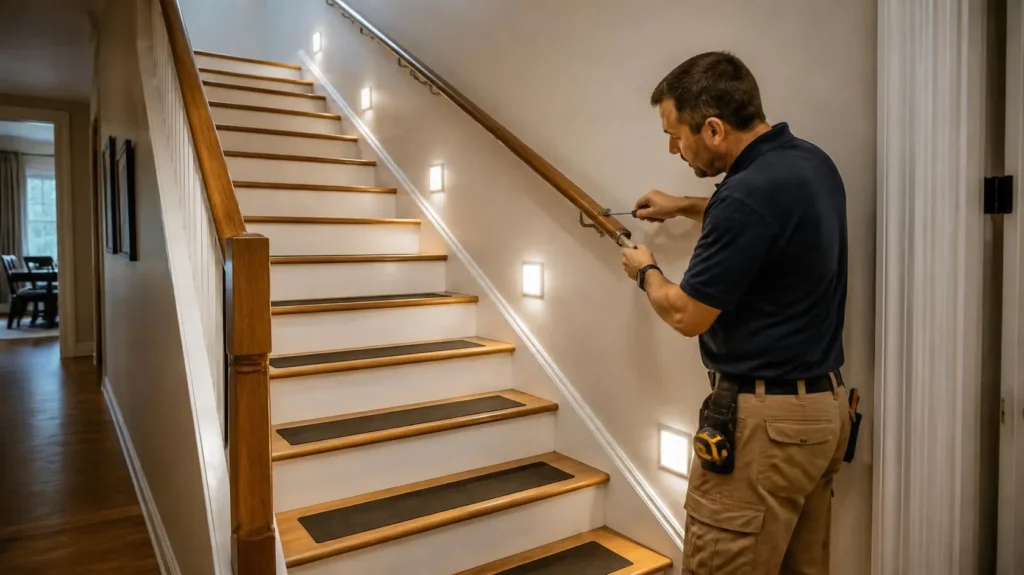
Hold the handrail gently to check whether it feels secure. Look for loose brackets, damaged fixings, or sections that are difficult to grip. Repair unstable rails promptly, and consider professional installation if the staircase lacks adequate support.
Keeping Stairways Clear of Clutter
Shoes, toys, laundry, and loose cables can obstruct steps and cause trips. Keep the entire staircase clear, including the landings at both ends. Create a nearby storage spot for frequently misplaced items so they do not accumulate on the stairs.
Making Home Stairs Safer for Daily Use
Effective Fall Prevention Measures combine good maintenance with practical improvements to the staircase. Clean surfaces, reliable lighting, and secure handrails can help reduce common hazards without requiring a complete renovation.
Orthopaedic trauma surgeon Michael F. Githens emphasizes prevention, explaining, “Small changes at home, combined with strength and balance activities, can help older adults stay confident, active and independent.” His advice highlights the value of making everyday environments easier to navigate.
Keeping Stair Treads Clean and Slip-Resistant
Remove dust, dirt, and spills regularly to maintain traction. If your stairs are slippery, consider securely fitted, non-slip stair treads suitable for the surface. Avoid loose rugs or mats that can shift underfoot, and allow freshly cleaned steps to dry before use.
Improving Lighting Around the Staircase
Make sure every step is visible, especially at night. Install adequate lighting at the top and bottom of the staircase, with switches that are easy to reach. Motion-activated lights can also help illuminate the stairs automatically when someone approaches.
Making Handrails Comfortable to Grip
Choose handrails that provide a firm, comfortable grip throughout the staircase. Check that their height, shape, and placement suit the people using them. Where practical, handrails on both sides can offer additional support, provided they do not make the stairs uncomfortably narrow.
Maintaining Stairs Before Small Problems Grow
Regular inspections help you spot problems before they become expensive or dangerous. Add staircase checks to your household maintenance routine and pay attention to changes in how the steps feel or sound.
Professor Lindy Clemson, a researcher in falls prevention, has emphasized that “Preventing falls is a really important way of helping people to remain healthy and independent as they grow older.” Keeping the home environment safe is an important part of supporting that independence.
Checking Steps for Damage Each Week
Take a quick look at the stairs every week for loose fittings, cracks, worn coverings, and changes in stability. Check handrails and lighting at the same time. If you notice a new problem, arrange a closer inspection rather than assuming it will resolve itself.
Repairing Loose Boards and Worn Stair Parts
Fix loose boards, damaged nosings, and unstable railings promptly. Avoid relying on temporary fixes that leave the underlying problem unresolved. If damage affects the staircase’s structure or stability, consult a qualified professional before using the affected section.
Choosing Durable Materials for Stair Repairs
Select repair materials that suit the staircase’s construction and expected use. Durable timber, securely fitted stair coverings, and appropriate non-slip finishes can support long-term performance. Make sure replacement parts fit correctly and comply with applicable building requirements.
Start Making Your Home Stairs Safer Today
Safer stairs begin with simple habits, remove clutter, improve lighting, maintain secure handrails, and repair damaged steps promptly. Regular checks can help you catch hazards before they lead to accidents.
Walk through your home today and inspect each staircase carefully. Address immediate risks first, and contact a qualified professional when repairs require specialist skills. A safer staircase is a practical investment in everyday comfort and peace of mind.